
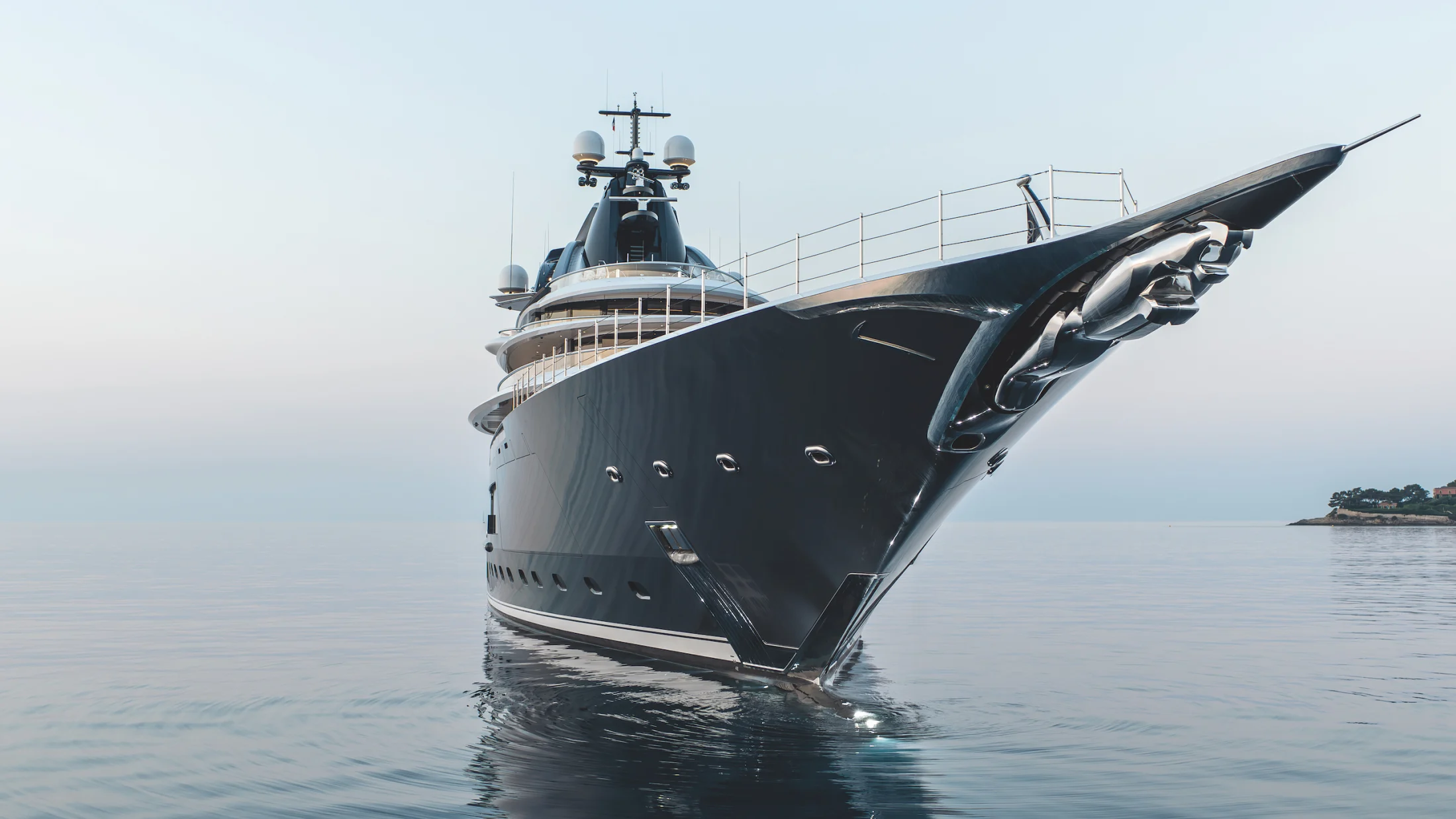
When the 122-metre superyacht Kismet glided past the London skyline earlier this week, it wasn’t just another spectacular vessel turning heads on the Thames. This floating masterpiece—named Motor Yacht of the Year at the 2025 World Superyacht Awards—represents the pinnacle of modern yacht design, engineering and craftsmanship. Built by German shipyard Lürssen, Kismet is the latest chapter in a remarkable lineage of yachts commissioned by the same owner, each more ambitious than the last.
Her predecessors were hardly modest: a 67-metre yacht delivered in 2007 (now Global), followed by a 95-metre award-winner now known as Whisper. Yet the new Kismet eclipses them all. Combining groundbreaking hybrid propulsion, cinematic interior design and an array of lifestyle features rarely seen even in the ultra-luxury world of superyachts, she stands as one of the most technically and artistically ambitious private vessels ever built.
A Superyacht with Vision
Behind Kismet is an immensely successful American entrepreneur and his family, who played an active role in shaping the yacht’s personality. But transforming such an ambitious vision into reality required a global team: naval engineers, architects, designers and craftspeople numbering in the hundreds.
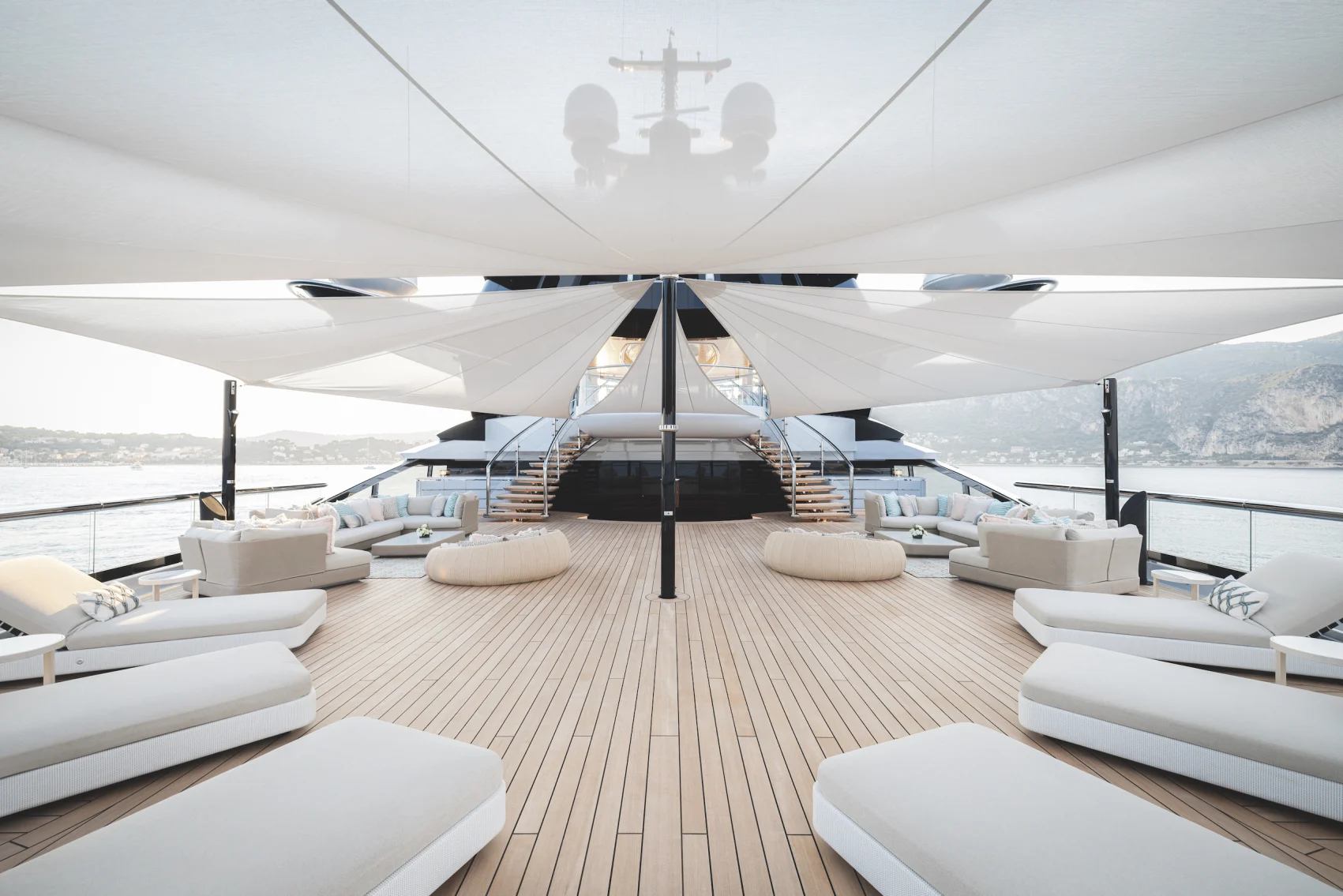
German shipyard Lürssen handled construction, while the exterior lines were drawn by Italian design studio Nuvolari Lenard. The dramatic interiors came from London-based Reymond Langton Design, a studio renowned for blending classical luxury with contemporary innovation. Owner representatives Kyle and Gerry Fultz—both veterans of previous Kismet projects—oversaw the build.
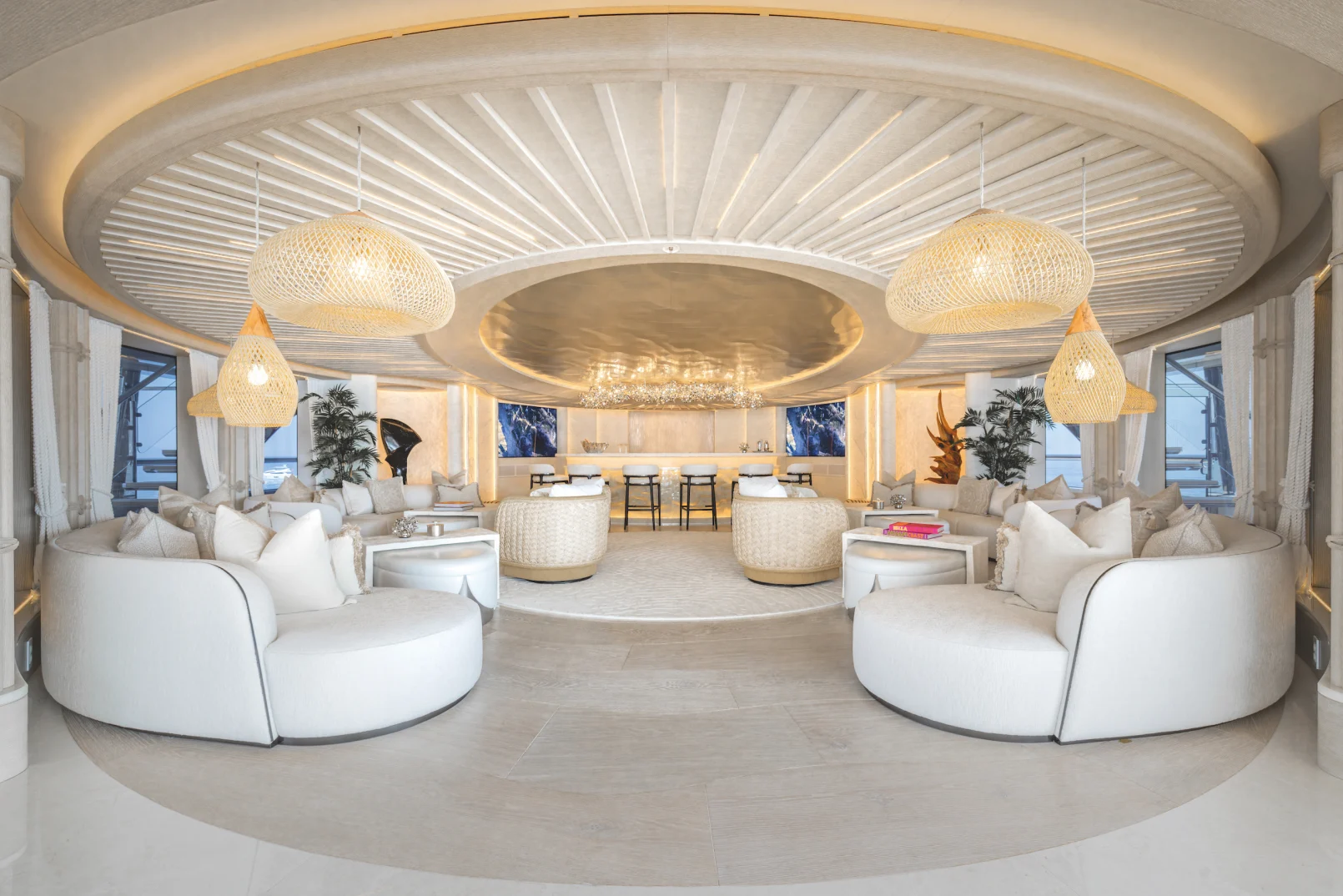
The result, as the World Superyacht Awards judges described it, is a yacht defined by “outstanding lifestyle features” and “spellbinding interiors where no centimetre is overlooked.”
Decks Designed for Spectacle
From the outside, Kismet radiates power and elegance. Her sweeping lines culminate in a distinctive mast that designer Carlo Nuvolari calls the yacht’s “crowning glory”—a sculptural element inspired by the funnels of historic ocean liners, once used to identify ships from miles away.
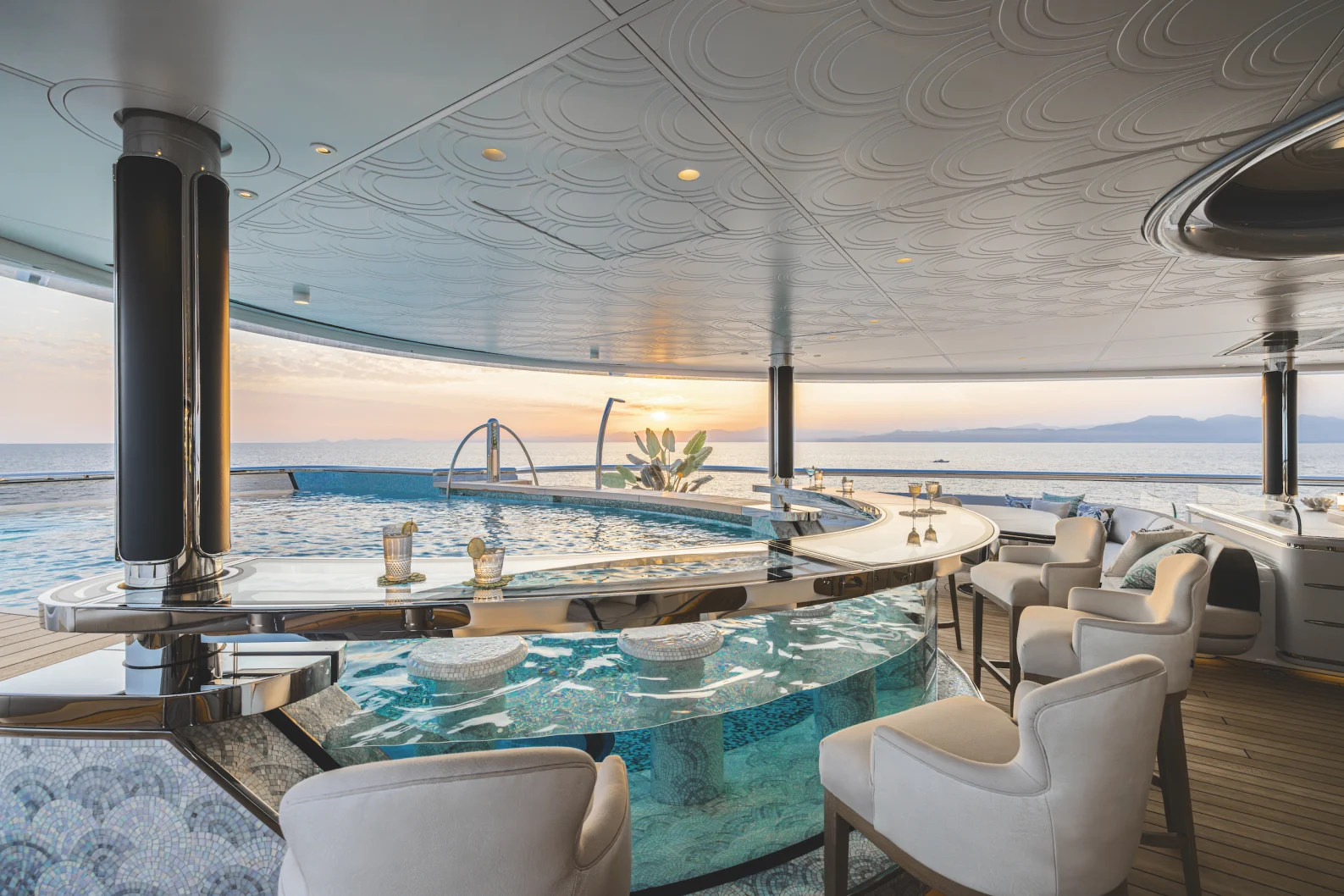
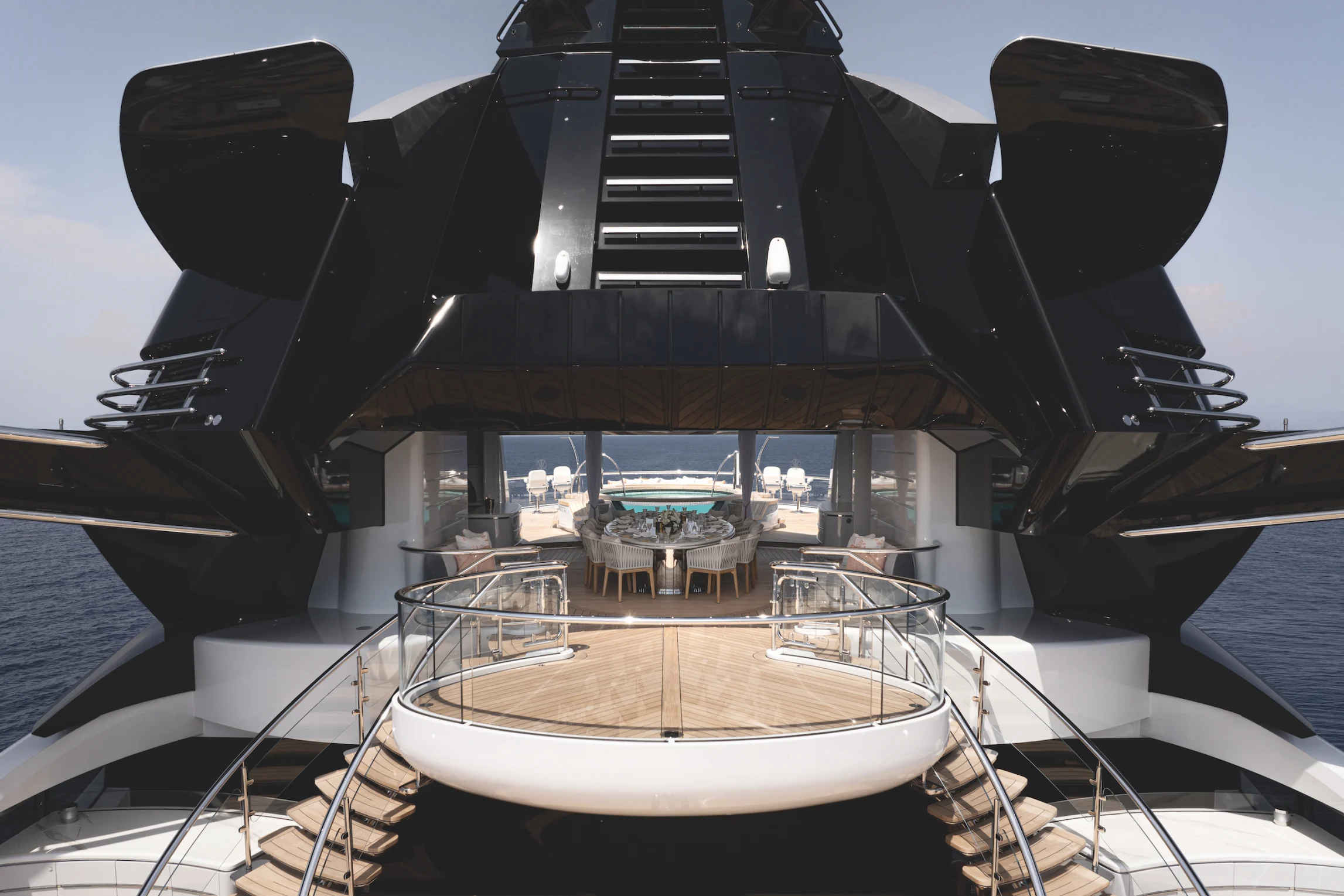
The outdoor spaces rival those of luxury resorts. A mosaic-lined swimming pool capable of holding 40 tonnes of water anchors the main deck lounge, while fire pits, shaded lounges and panoramic terraces provide countless places to unwind. On the sundeck, a private spa pool and sunpads offer a tranquil retreat high above the sea.
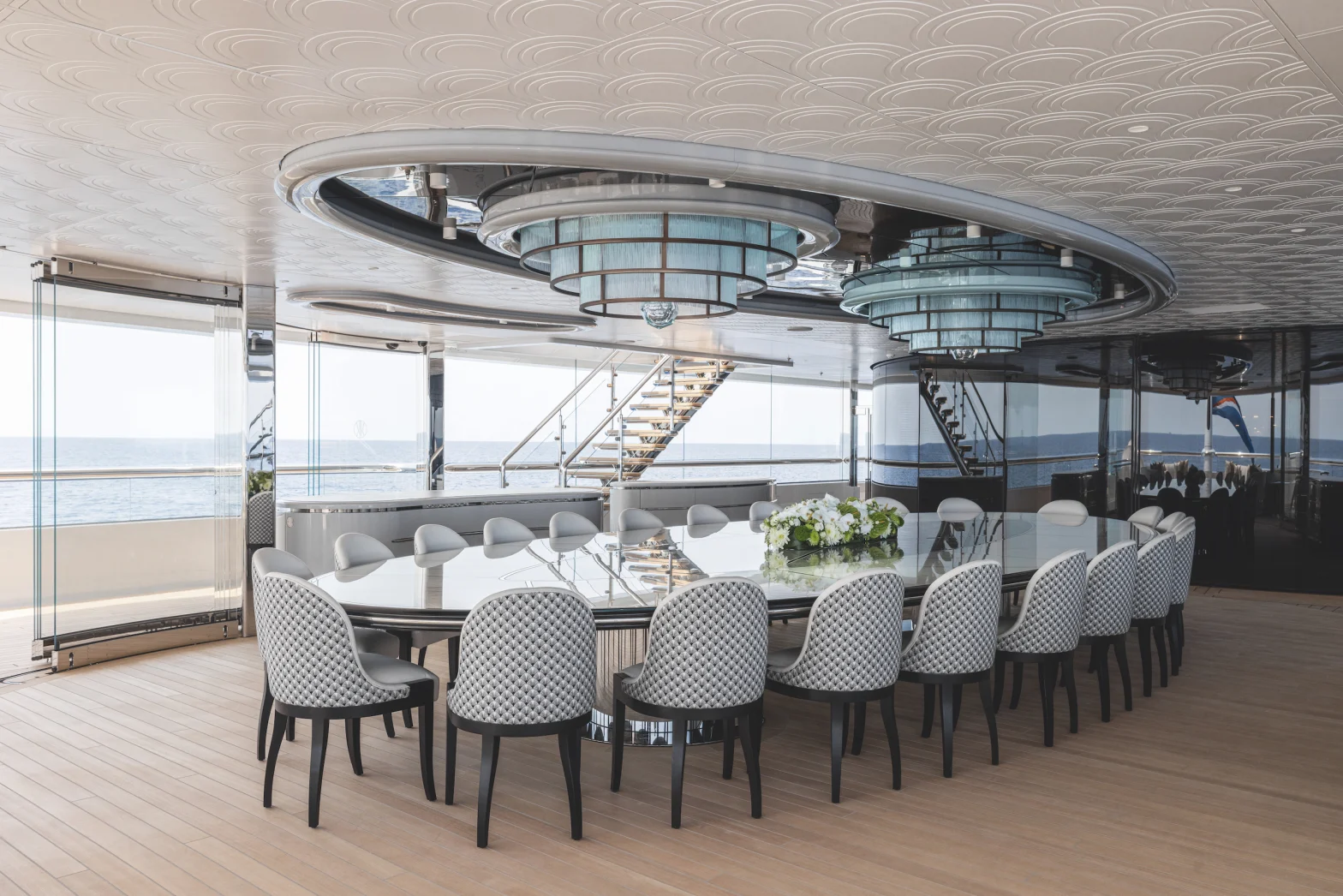
One standout feature is the yacht’s winter garden, an elegant upper-deck dining space illuminated by bespoke chandeliers. Nearby, guests can gather around outdoor fireplaces or enjoy alfresco dinners beneath custom-designed shade structures.
The decks also conceal unexpected entertainment options, from an interactive dance floor and giant video wall to a pickleball court and half basketball court—proof that Kismet is as much about fun as it is about refinement.
Hybrid Power Beneath the Glamour
While the yacht’s design grabs attention, her engineering is just as remarkable. Kismet is equipped with a hybrid propulsion system that allows her to cruise silently on battery power alone—an unusual capability for a vessel of this scale.
At the heart of the system are electric PTI motors (power take-in) and PTO generators (power take-off), paired with 470kW Corvus battery packs roughly the size of a small car. Together, the system allows the yacht to travel for up to 15 minutes on electric power alone—ideal for entering harbours or environmentally sensitive waters.
Each of the yacht’s two shaft lines can generate up to 600kW of electrical energy, enough to power the entire vessel—including its 37 crew and 12 guests—during normal operations.
The technology required contributions from several specialist companies: MTU supplied the engines, Reintjes provided gearboxes and PTI/PTO technology, and Danish manufacturer Danfoss delivered the advanced multi-drive energy system.
For Lürssen project manager Thorsten Göckes, the propulsion arrangement represented something entirely new. “None of our ships has ever had this type of system before,” he said. “It’s a completely new configuration—but it worked surprisingly well.”
A “Cathedral of Design”
Step inside Kismet and the atmosphere shifts from engineering marvel to theatrical spectacle. Interior designer Pascale Reymond describes the concept as “Louis XIV meets Interstellar.” In other words: the grandeur of Versailles combined with futuristic design.
The interiors are filled with dramatic contrasts—classical ornamentation alongside sleek modern materials, antique influences paired with cutting-edge technology. Curves flow throughout the yacht, softening the immense scale of her spaces.
Ceilings are a particular highlight. Rather than simple panels, many are crafted from textured champagne-coloured aluminium designed by California studio Neal Feay. Each panel is milled from solid metal, carefully hollowed to reduce weight while maintaining structural rigidity. Integrated LED lighting and hidden speakers transform these surfaces into functional works of art.
Elsewhere, walls are adorned with hand-painted de Gournay wallpaper, antique mirrors and custom marquetry panels, while bars and furniture feature sculptural metalwork finished in bronze or champagne tones.
The TRON Corridor
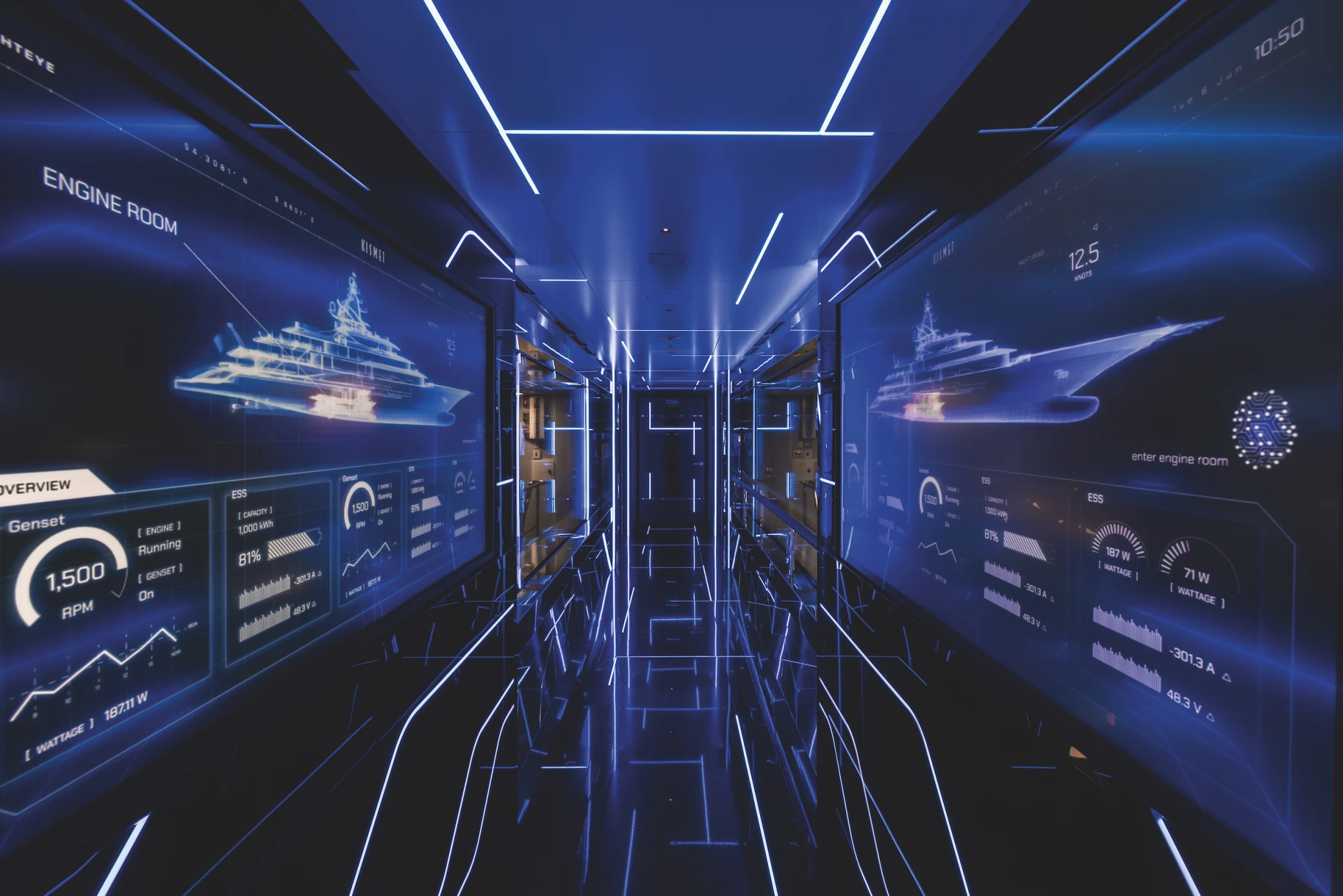
One of the most unforgettable experiences aboard Kismet lies deep within the yacht. A glass-lined passage through the engine room—known to the crew simply as the “TRON corridor”—turns machinery into theatre. Lit dramatically with chrome surfaces and digital displays, the corridor allows guests to walk through the heart of the yacht’s propulsion system as if entering a science-fiction set. It’s an unusual design choice, but one that perfectly reflects the vessel’s overarching theme: a journey through time and space.
Another engineering first for Lürssen is Kismet’s partially underwater lounge and cinema. The room features enormous windows—measuring 1.1 metres by 2.8 metres—that extend below the waterline, offering guests a cinematic view of the ocean itself.
Creating these windows required over a year of testing. The final glass panels, engineered by specialist manufacturer Seele Sedak, are up to 15 centimetres thick and layered for strength. According to Göckes, they are so durable that “if you hit an iceberg, the iceberg would probably get the dent.”
A Palace at Sea
The interior storytelling continues throughout the yacht. The main saloon draws inspiration from the Hall of Mirrors at Versailles, with mirrored ceilings and mouldings reinterpreted through modern design. Rather than replicating the palace exactly, the designers distilled its essence—balancing dark and light tones, reflective surfaces and dramatic voids.
The owner’s suite takes inspiration from the Orient, with golden metallic surfaces, silk fabrics and dark lacquer panels creating a warm, intimate atmosphere. Nearby lies the owner’s office, decorated in bold red and black leather. Elsewhere, guest cabins on the main deck are themed after famous fashion houses, each accessed through ornate doors with cut-glass plates and intricate metal inlays.
Descending to the lower deck reveals a world dedicated entirely to relaxation. Here, guests find a fully equipped gym, yoga studio and juice bar alongside a Balinese-inspired spa featuring a hammam, sauna, ice plunge pool, cryotherapy treatments and heated loungers. One of the spa’s most striking features is a “steam fireplace,” where mist and lighting create the illusion of flames rising from water.
Nearby, a beauty salon decorated with crystal-encrusted wallpaper and luxurious guest suites completes the wellness sanctuary.
For Captain Olav Hinke, manoeuvring a 122-metre yacht out of the shipyard and into the canal required precision. The distance from the helm to the bow tip alone measures 55 metres. Yet during sea trials, Kismet proved remarkably agile. Even without stabilisers engaged, the yacht demonstrated exceptional balance and smoothness.
“This boat is extremely stable,” Hinke said. “You barely feel that you’re moving. She is an incredible sea boat.”