

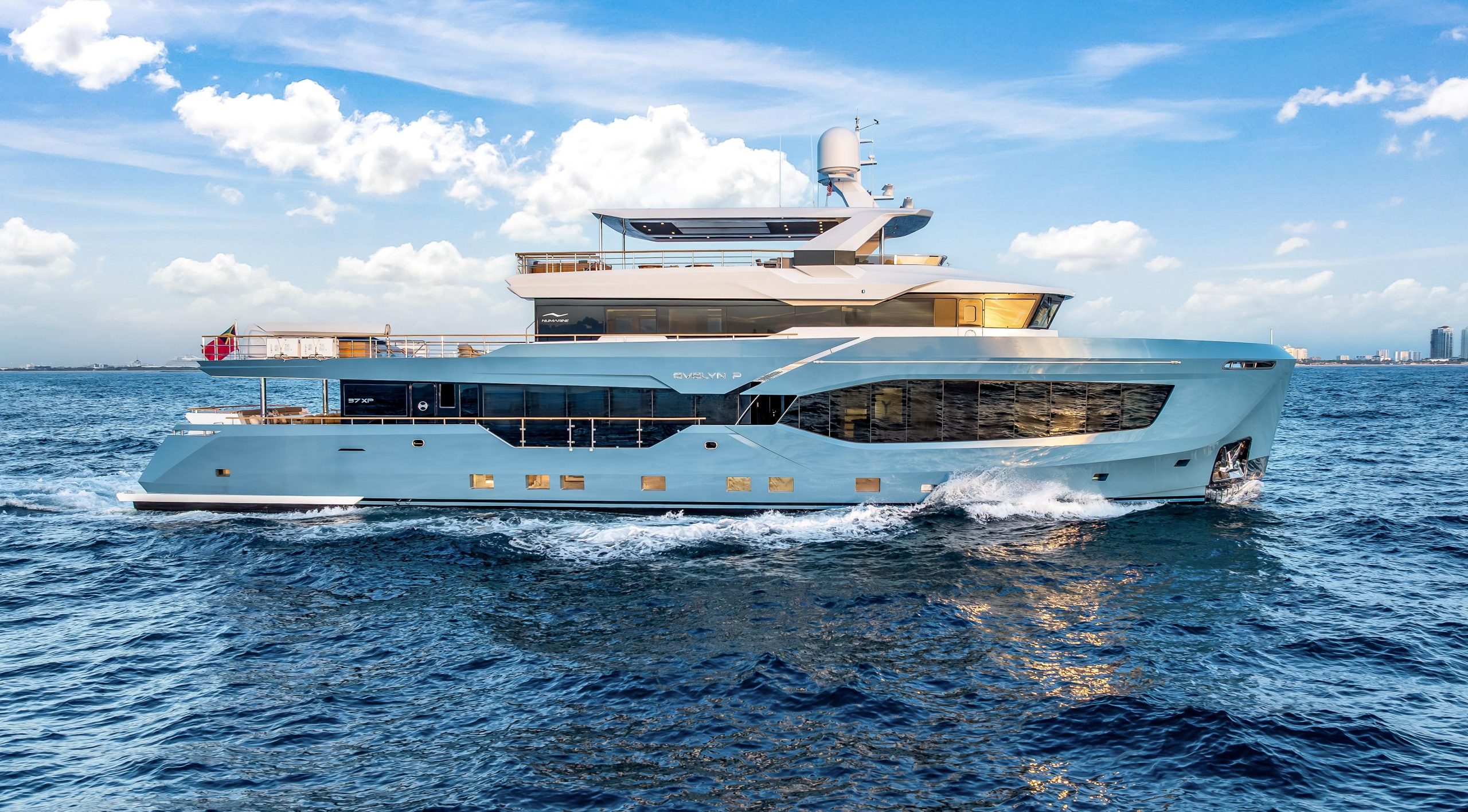
From dream to reality over a decade, H2 is the consummation of a lifelong vision held by its owner, Brian Schmitt, who set out to build a vessel capable of serious exploration. At 33.5 metres, this aluminium power catamaran was conceived not merely as a luxury yacht, but as a seafaring research- and adventure-platform that pays homage to oceanic voyagers like Jacques Cousteau.
Early inspirations and the path to H2
Schmitt’s fascination with the underwater realm began in his youth growing up in the Florida Keys, where he spent countless hours diving and absorbing marine life. He has often cited Cousteau, with his red skull-cap and daring voyages, as an early inspiration. The 1974 film The Dove — chronicling a solo circumnavigation — further fueled his ambition to build and pilot his own vessel across the globe.
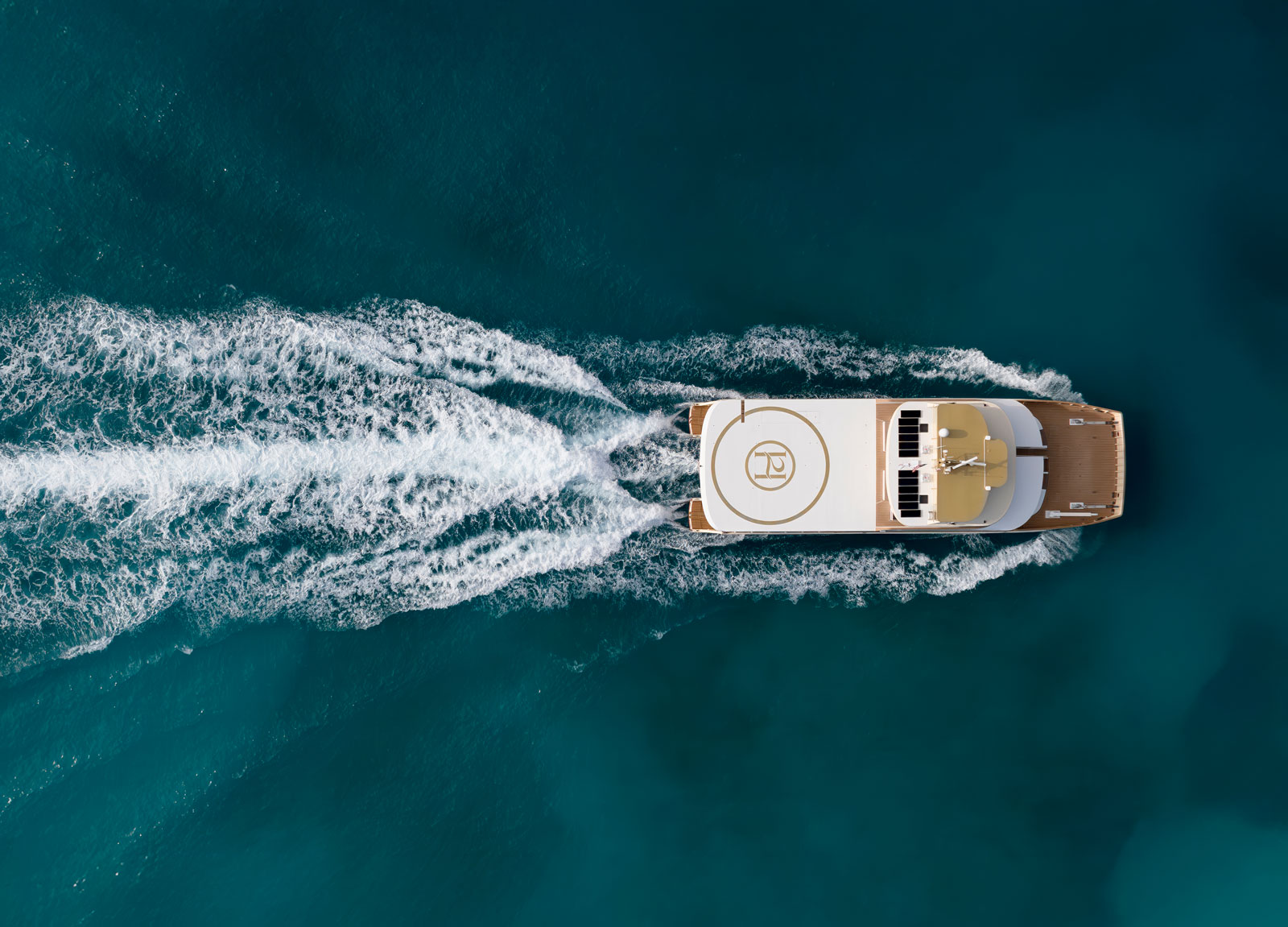
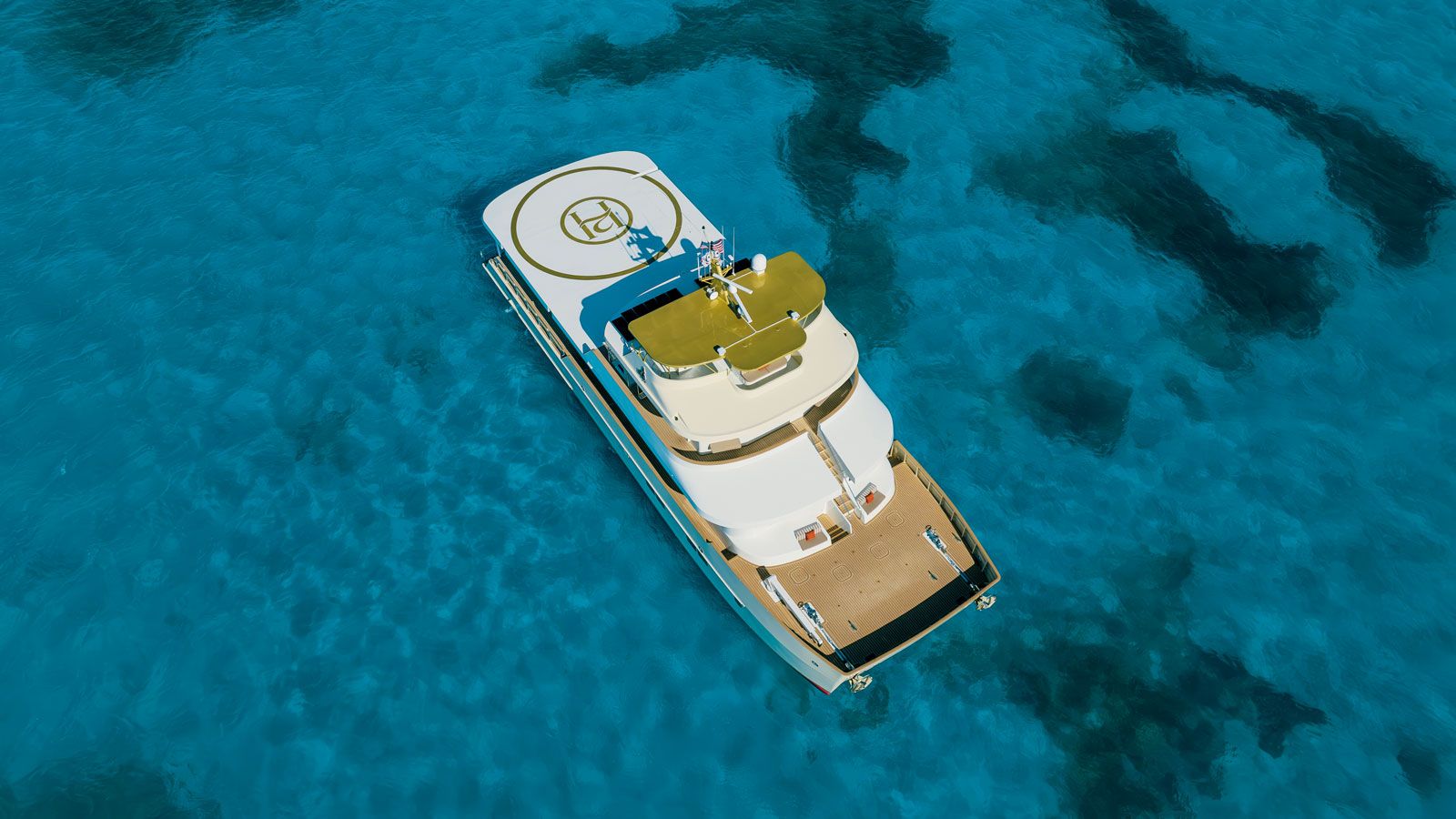
Together with his wife, Dee Dee (a fellow biology enthusiast), Schmitt had already tested the waters — literally — with a 17.4 metre catamaran called Hippocampus. But as their ambitions and scope of exploration grew, they realized that a more capable, custom-built platform would be required. Schmitt envisioned a vessel that could support a 7.9-metre tender, a submersible, a small car, a fixed-wing aircraft, and extended offshore range — all packaged in a rugged, versatile hull that could handle remote, demanding voyages.
Because no existing production or custom yacht matched his unusual list of requirements, Schmitt resolved to build his own in the U.S. He assembled a team of trusted professionals — including multihull specialist John Marples, catamaran-builder Felix Herrin, and naval architects Van Gorkom Yacht Design. He chose to build in North Carolina, both to leverage local boat-building talent and to maintain strong oversight over every detail.
Design and construction: function, strength, and style
From the start, H2’s design was grounded in the need to balance capability and performance under heavy loads (helicopter, submarine, tenders). To that end, her twin hulls incorporate underwater steps for extra stability. She was engineered with a length-to-beam ratio pushing 13:1, optimized to carry a fuel load of 12,000 gallons and still deliver respectable speed and range.
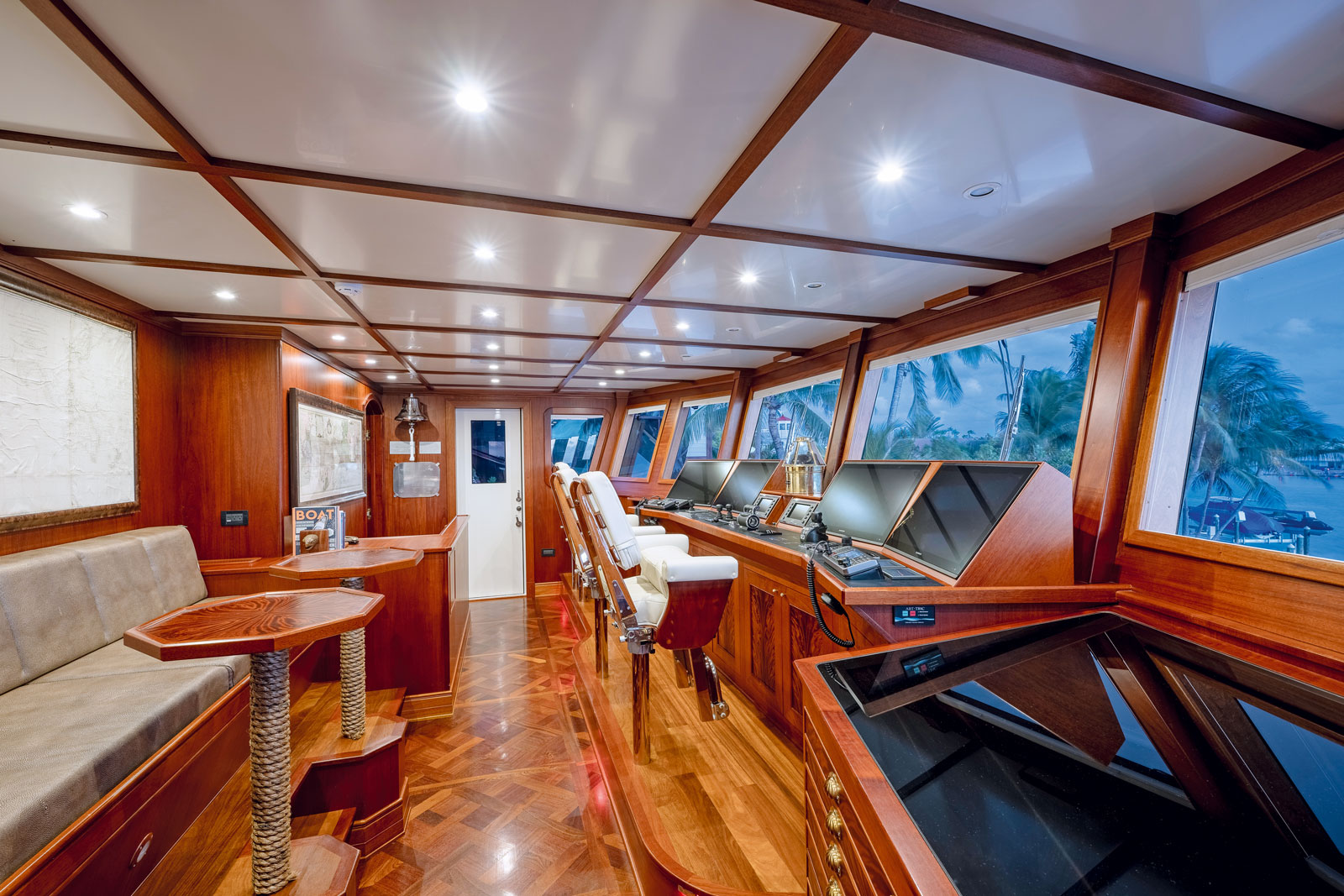
Unlike many modern yachts that opt for composite materials, H2 is built entirely of aluminium. That choice was deliberate: aluminium is easier to repair in remote locations, offers robustness under stress, and better supports the mission-oriented focus Schmitt had in mind. Even so, aluminium comes with acoustic and vibration challenges. To mitigate these, the team installed an advanced cathodic protection system to guard against corrosion and isolated interior structures using floating mounts, laminates, cork, foam, and other insulating materials to prevent noise transmission.
The vessel’s powerhouse consists of twin MTU 10V 2000 M96L engines driving her propulsion, with two Northern Lights 38 kW generators supplying hotel loads. But the power architecture is more complex than typical: two independent lithium-ion battery banks (one dedicated to house systems, one to communications) support critical loads if the main bank fails. Additional solar panels and propane usage for certain appliances reduce electrical demands, while dual DC/DC converters help redistribute power as needed.
Interior and thematic design
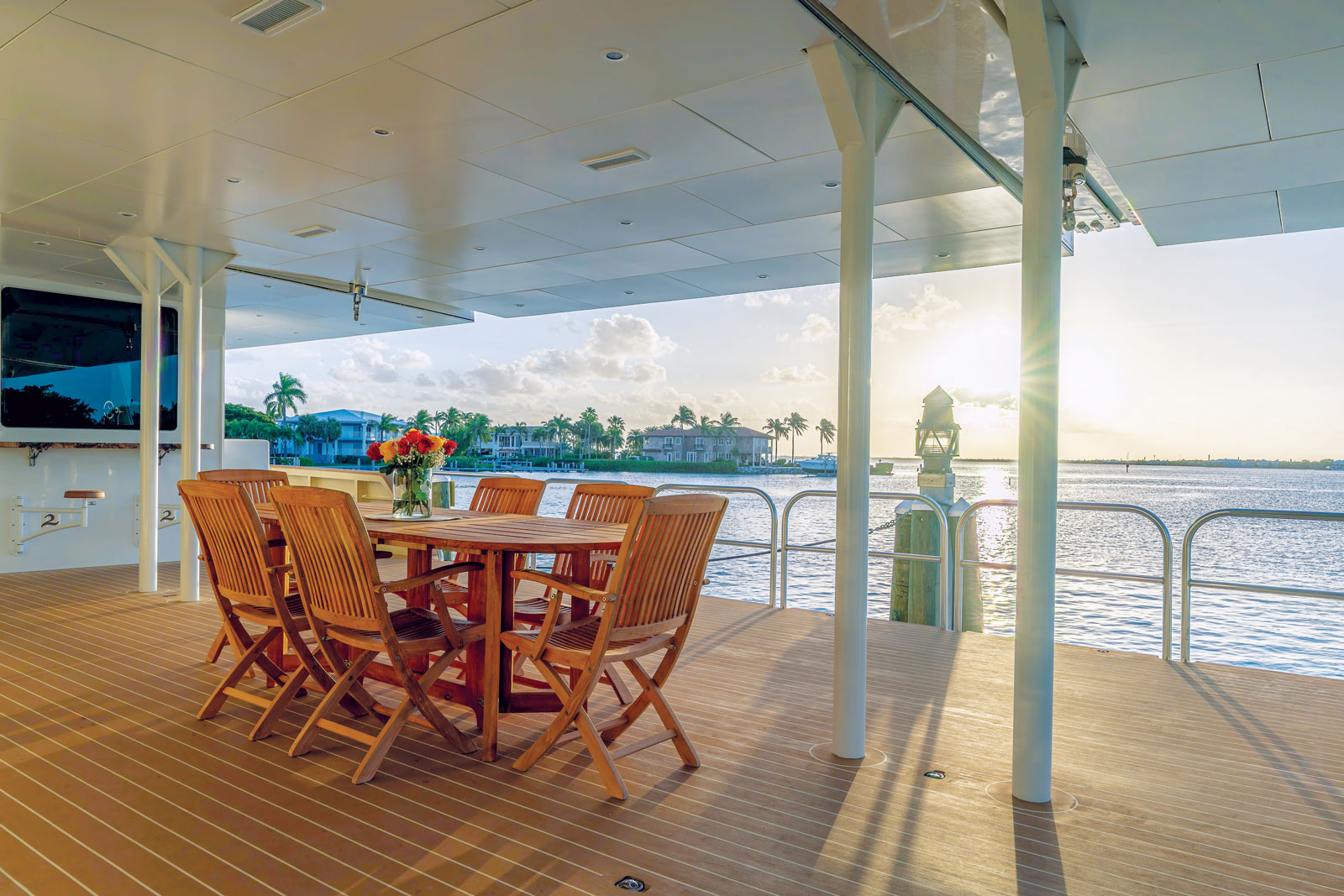
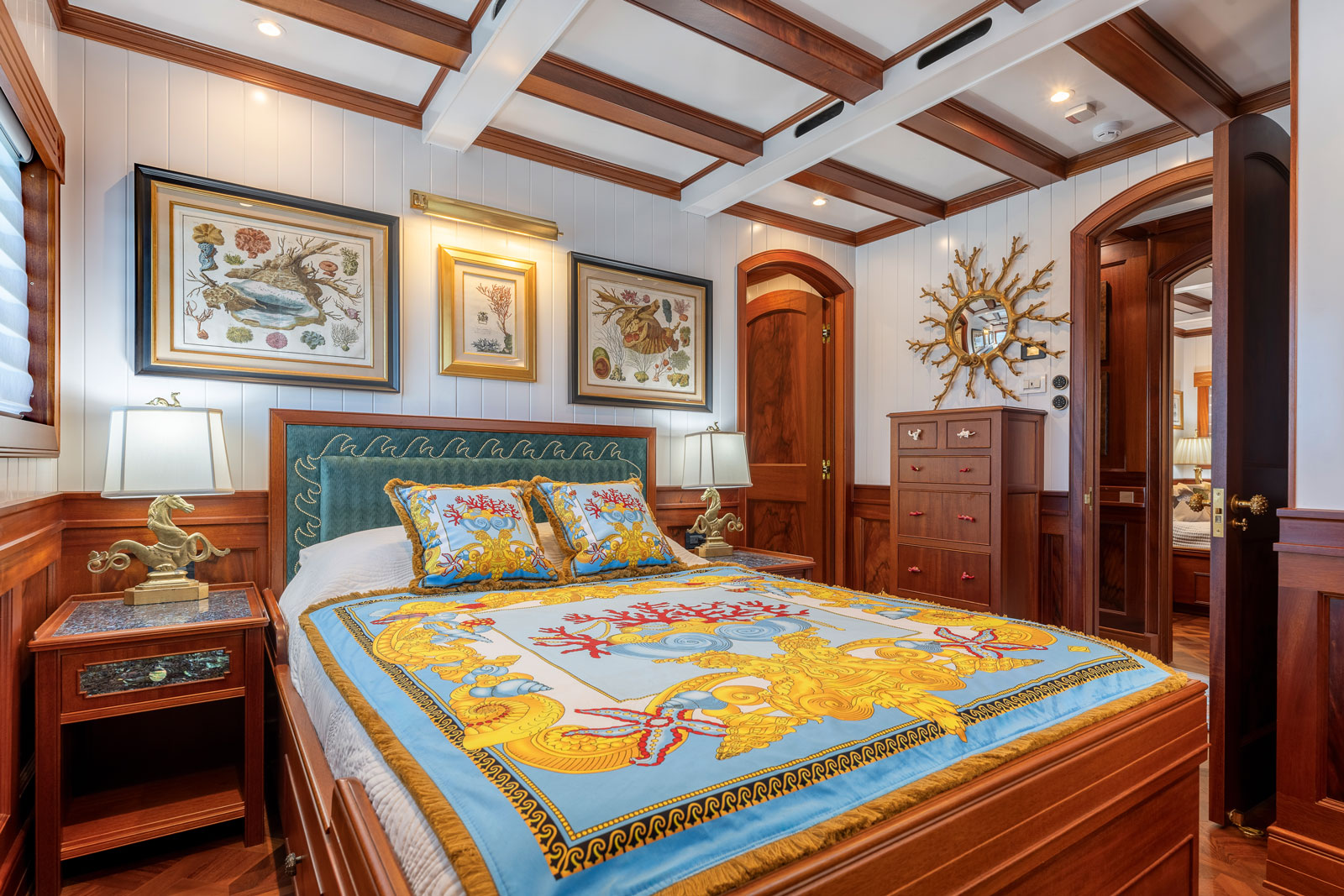
Schmitt and his team approached the interior as a treasure trove, reflecting his passion for collecting maps, antiquities, and natural artifacts. A 1719 map of the Western Hemisphere presides over the salon fireplace, and throughout the yacht one finds fossilized wood, Venetian grotto elements, and ornate objects curated from nautical decor sources. Each cabin is themed — whether around marine life, exploration, or coastal lore — with custom woodwork, mosaics, carved veneers, and bespoke hardware. The main guest deck houses three en suite queen staterooms, separated by a map-decorated corridor, while a private upper-deck owner’s suite includes a dramatic shower mosaic inspired by classic Greek sea motifs.
Unlike Hippocampus, H2 was built from the outset with a full crew complement in mind. The twin hulls each contain crew accommodations: the starboard hull offers living quarters for the captain and chief steward, while the port hull includes berths for the rest of the crew, along with laundry, galley, and utility areas. The design ensures crew privacy and operational efficiency while maintaining a spacious, comfortable environment for guests.
The “toy” story: submarine, helicopter, tenders and beyond
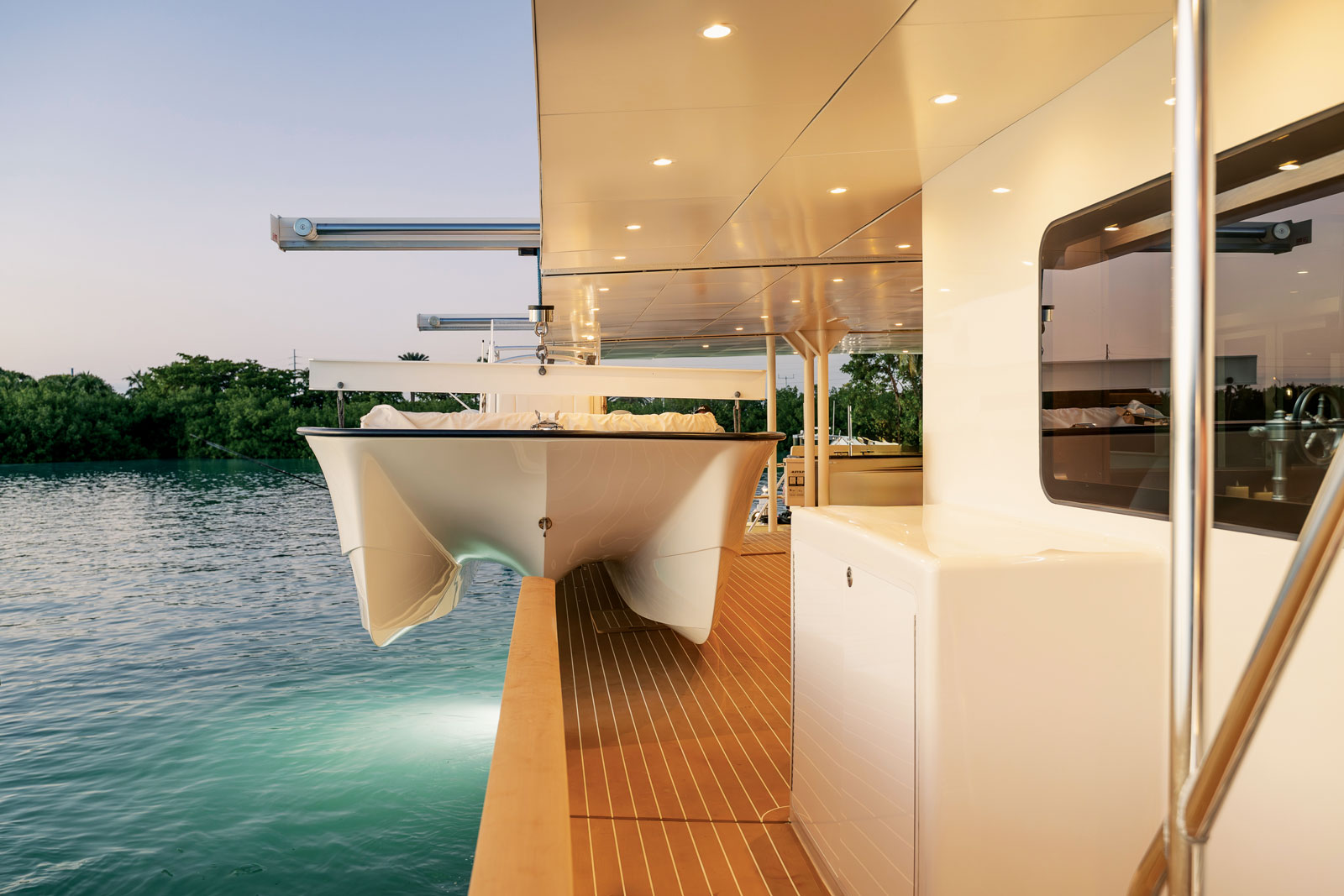
H2 is not just about cruising in comfort — it is a mobile expedition vessel. On her deck are housed a 7.9-metre Calcutta tender, a 5.2-metre Twin Vee tender launched from the foredeck, an Oreion Reeper utility vehicle, and a two-person Nemo submersible. A Robinson R44 helicopter hovers above on the helipad. Each asset necessitated careful engineering: telescopic davits, retractable cranes hidden beneath the helideck, and reinforced structural foundations all had to be integrated without compromising the vessel’s integrity.
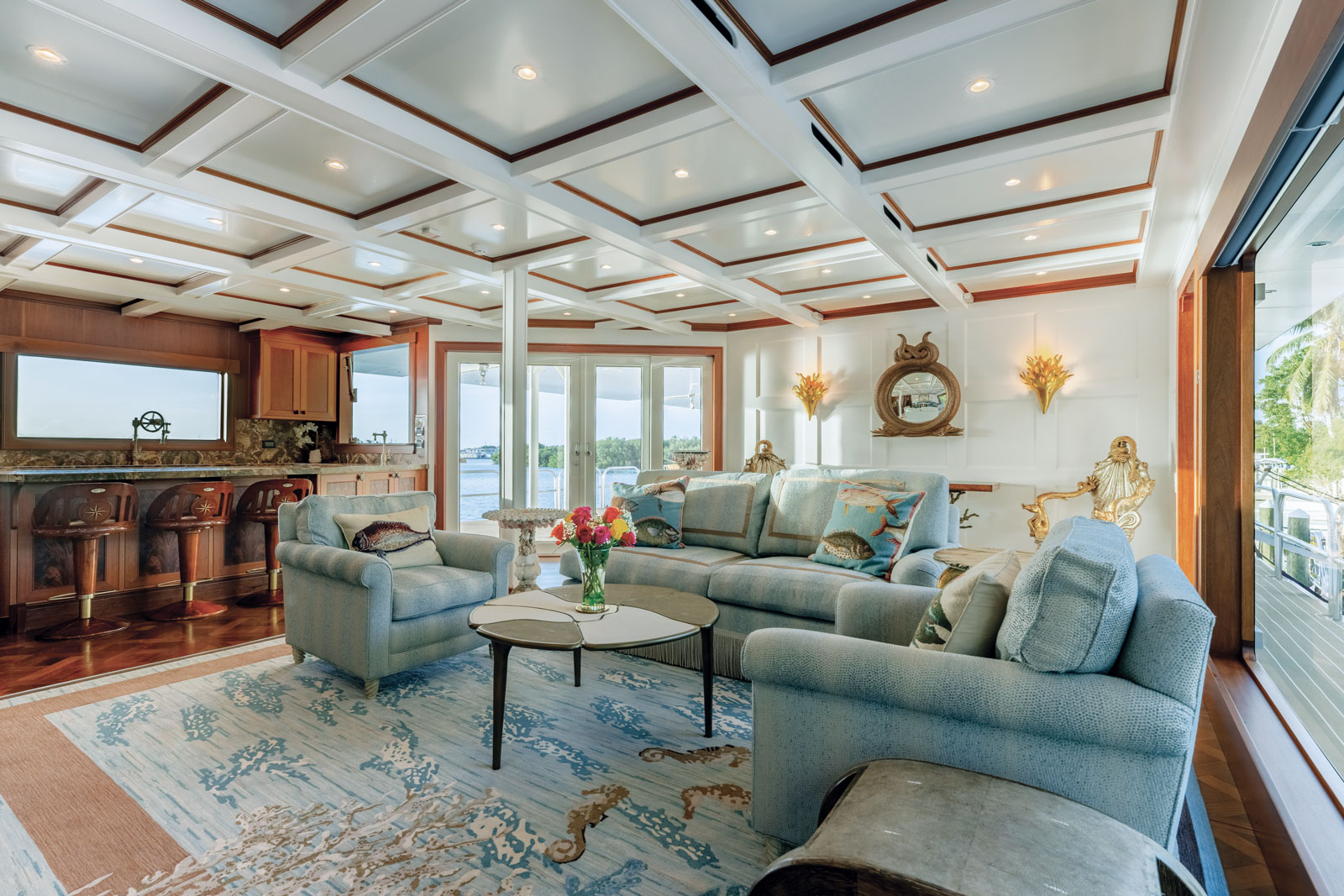
When all those toys are stowed, the aft deck opens up to become a roomy al fresco dining area. The novelty and complexity of these systems demanded ingenious solutions from naval architects and structural engineers, particularly to manage cantilever loads, crane footings, and retracting supports.
Mission and trajectory
Schmitt and his crew are setting their sights high: their initial itinerary includes stops in Curaçao, eastern Canada, and Greenland, with longer-term plans to push into Patagonia, the Falklands, and Antarctica. To withstand harsher environments, additional plating was added at the waterline, and internal structural spacing was reinforced at the bow and stern. Greenland will serve as a proving ground for polar cruising capability.
After nearly a decade of planning and five years in build, H2 finally launched in July 2023 in Wanchese, North Carolina. Her launch carried symbolic weight: in an era when much of the superyacht industry is European-dominated, H2 was a boldly American creation. As a tribute to the team, Schmitt had a plaque engraved with the names of every craftsperson involved, and presented each with a custom cast Hippocampus sculpture.
For designers Marples and Herrin, as well as for Schmitt, the project evolved into more than a build — it established lasting friendships. The red skull cap Schmitt wore at the launch echoed the imagery of Cousteau, reminding all present that this vessel was born of fascination, curiosity, and the relentless pursuit of exploring the world in depth.